

Winter South Rim Itinerary
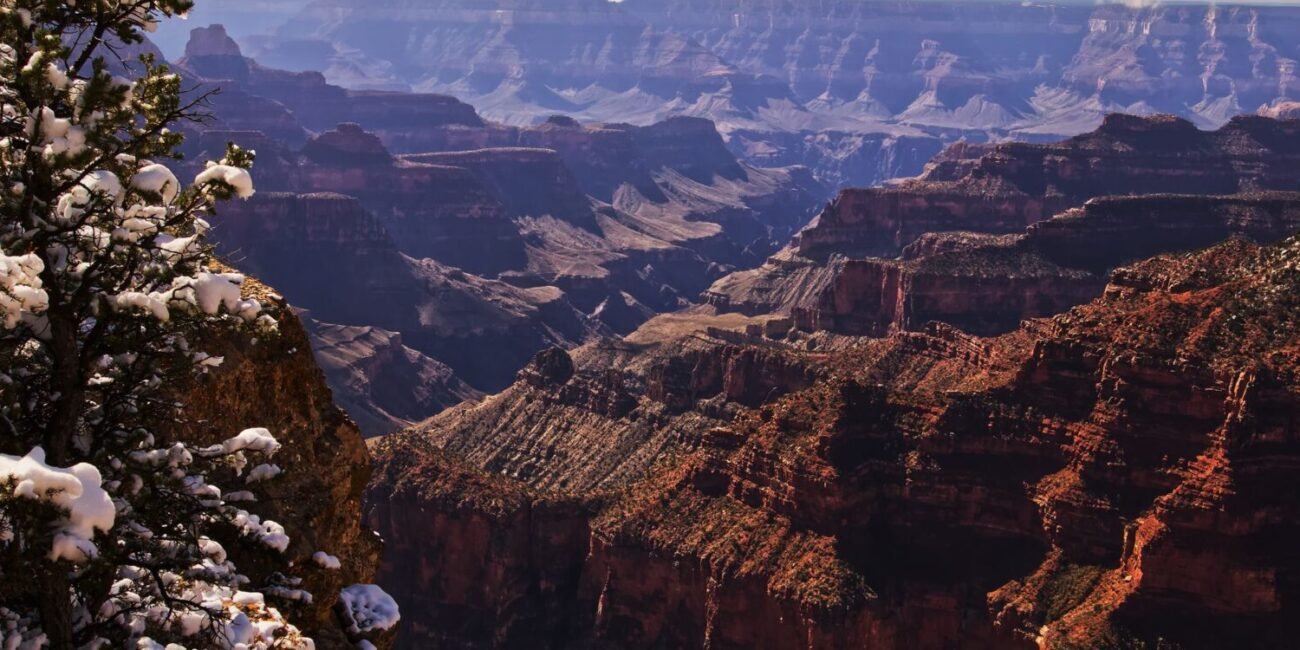
Winter can bring snow-covered rims, clear air and far fewer visitors, but it also changes the pace of the trip. Shorter daylight, icy paths, cold wind and changing road conditions mean the best winter itinerary is intentionally flexible. Count usable daylight and safe travel time rather than treating a winter calendar day like a summer sightseeing day.
Start Later Than a Summer Itinerary
Winter sunrise is later, and roads or walkways may need time to improve after overnight snow or ice. Check conditions first, then begin with central South Rim viewpoints and the Rim Trail only where footing is comfortable. Keep traction devices and warm layers available when conditions warrant them.
Clear Morning
Use good visibility for viewpoints and scenic driving. Winter air can produce exceptional long-distance views after storms.
Stormy Morning
Use Yavapai Geology Museum, historic village buildings and shorter rim outings while waiting for visibility or roads to improve.
Icy Morning
Do not force a trail or exposed rim walk simply because it is on the itinerary. Shift to paved, maintained and indoor options until conditions improve.
Choose One Scenic Corridor
Desert View Drive can be spectacular in winter when roads are clear, but do not assume every road or overlook will be equally accessible after storms. Hermit Road operations also vary seasonally. Check current NPS transportation and road information before choosing the corridor.
Use Museums and History as Part of the Plan
Winter is an excellent time to spend longer indoors without feeling as though you are wasting perfect hiking weather. Yavapai Geology Museum and historic Grand Canyon Village add depth and provide warm pauses between outdoor stops.
Winter Weather Is Part of the Experience
Clouds, fog and snow can temporarily hide the canyon, then reveal it dramatically as conditions change. If travel is safe, patience can be more rewarding than abandoning the rim because the first view is obscured.
Treat Ice as a Serious Trail Condition
Below-rim routes can hold snow and ice in shaded upper sections while becoming warmer farther down. Do not interpret a clear parking lot as proof that the trail is dry. Check current trail information and choose conservative turnaround points.
Sunset Comes Early
Plan sunset before dinner rather than after it. Temperatures can fall quickly once direct sunlight disappears, so have warm layers and a simple route back to lodging or your vehicle.
Stay Close When Weather or Sunset Shapes the Day
Short daylight, early darkness and the possibility of snow or ice make a long commute less attractive in winter. If the canyon is the main purpose of the trip, compare in-park lodging and Tusayan before choosing a more distant base simply for a lower nightly rate.
Do Not Assume Summer Hours
Restaurant, visitor-service, shuttle and activity schedules can be more limited outside the main season. Check current operating information before building dinner, transportation or an indoor stop around a specific closing time.
Plan Fewer Stops and More Flexibility
A winter Grand Canyon day can be extraordinary when the itinerary respects weather, daylight and road conditions instead of pretending it is July with a coat. Check Today at the Grand Canyon before leaving your lodging so road, weather, parking and service changes shape the plan before you commit to it.