
Grand Canyon Geology
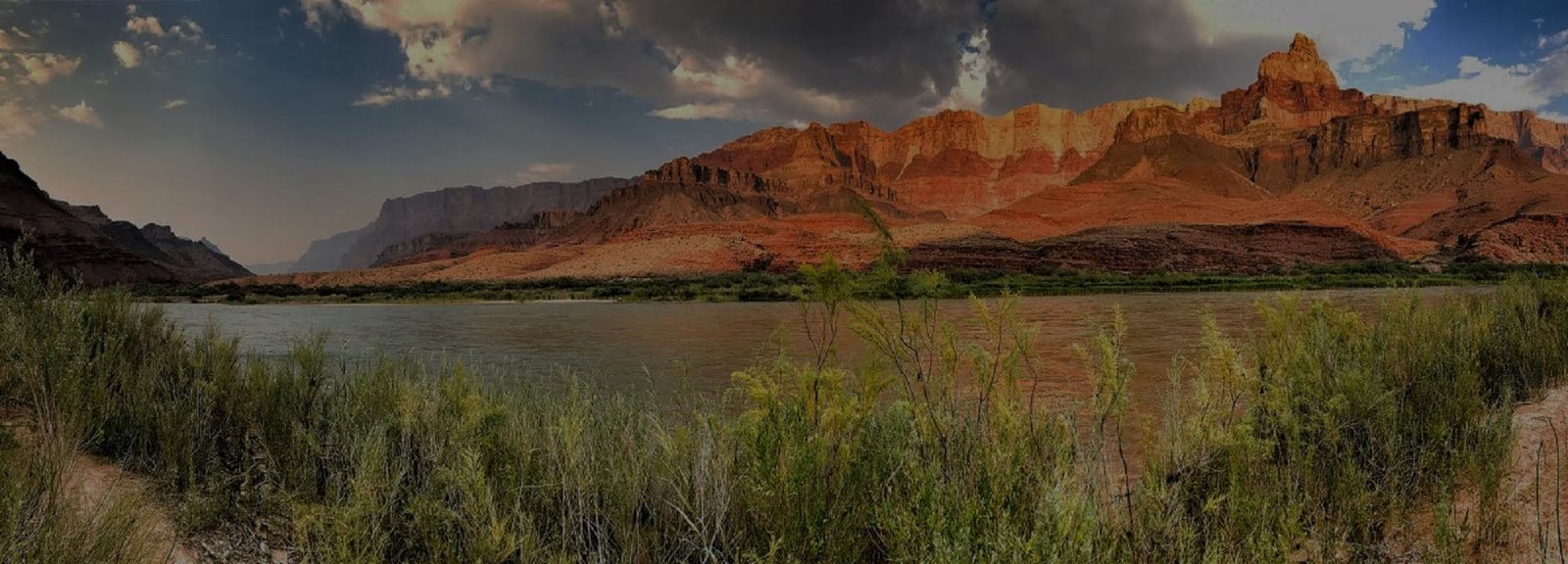
Grand Canyon is one of the world's clearest places to see geology as landscape. The walls expose crystalline basement rocks, tilted older strata, broad packages of nearly horizontal sedimentary rock, faults and erosional surfaces. Once you know a few visual clues, the canyon stops looking like one enormous wall and begins to read as a sequence.
At the bottom: crystalline rocks
Near river level, dark metamorphic and igneous rocks form the inner gorge in many parts of Grand Canyon. Their color, texture and steep walls look very different from the layered sedimentary rocks above.
Above them: layered cliffs and slopes
Sandstone, shale and limestone make the staircase-like walls most visitors recognize. Harder units commonly form cliffs and ledges, while softer units weather into broader slopes between them.
Across the landscape: structure
Faults, folds, tilted beds, unconformities and side canyons interrupt the apparent order. They are clues that the rocks record multiple episodes of deposition, deformation, uplift and erosion.
Layers, Structure and Erosion
Grand Canyon is not simply a stack of flat layers cut by a river. Look for places where beds tilt, rocks are folded or broken by faults, and younger layers rest across older surfaces. Weathering, floods, rockfall and the Colorado River continue to shape what visitors see today.
Three Visual Clues to Watch For
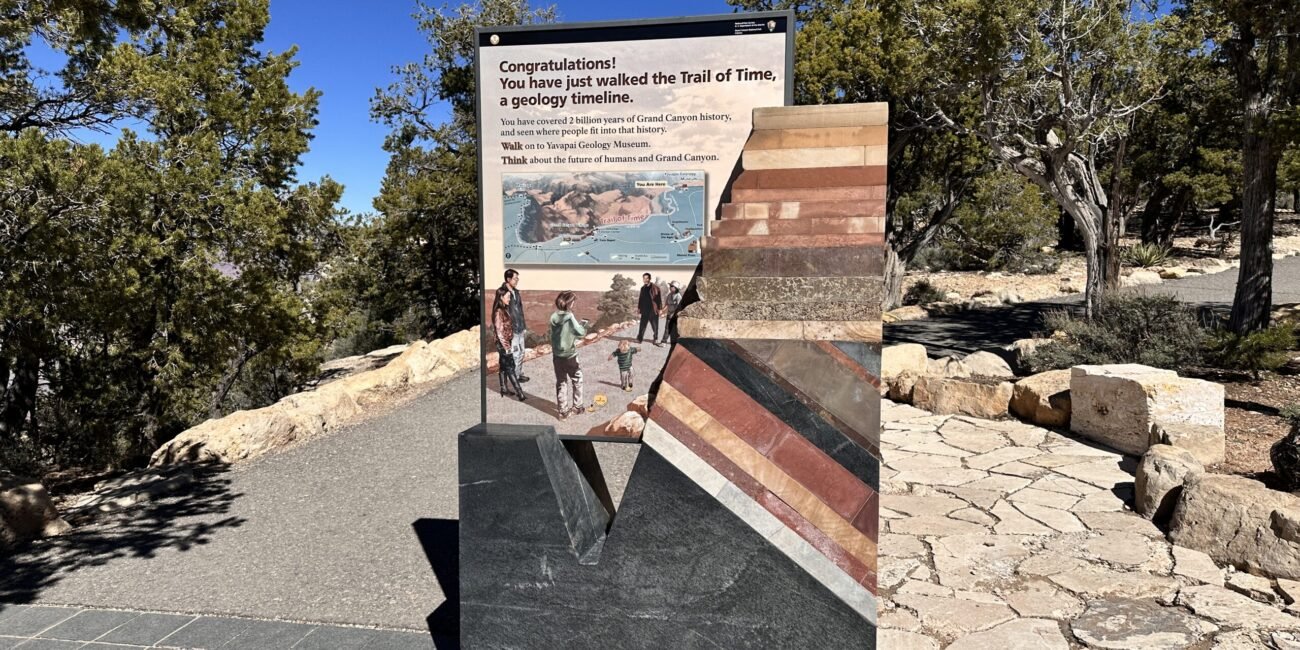
You do not need to memorize every formation name to start reading the canyon. From a good South Rim viewpoint, these three patterns make the geology much easier to follow.
Follow the Stair-Step Shape
Trace a resistant cliff horizontally across the canyon, then notice the softer slope above or below it. The repeating cliff-and-slope pattern is one of the easiest ways to recognize rock units at a distance.
Look Beyond the Red
The famous Redwall Limestone often appears red because iron-rich material from overlying rocks stains its surface. Color is useful, but cliff shape, bedding and position in the wall can be better clues than color alone.
Notice the Unconformities
Some boundaries represent intervals when rock was eroded or no new sediment accumulated. These unconformities can place very different rocks directly against one another and are among Grand Canyon's most important visible geologic relationships.
Walk the Trail of Time
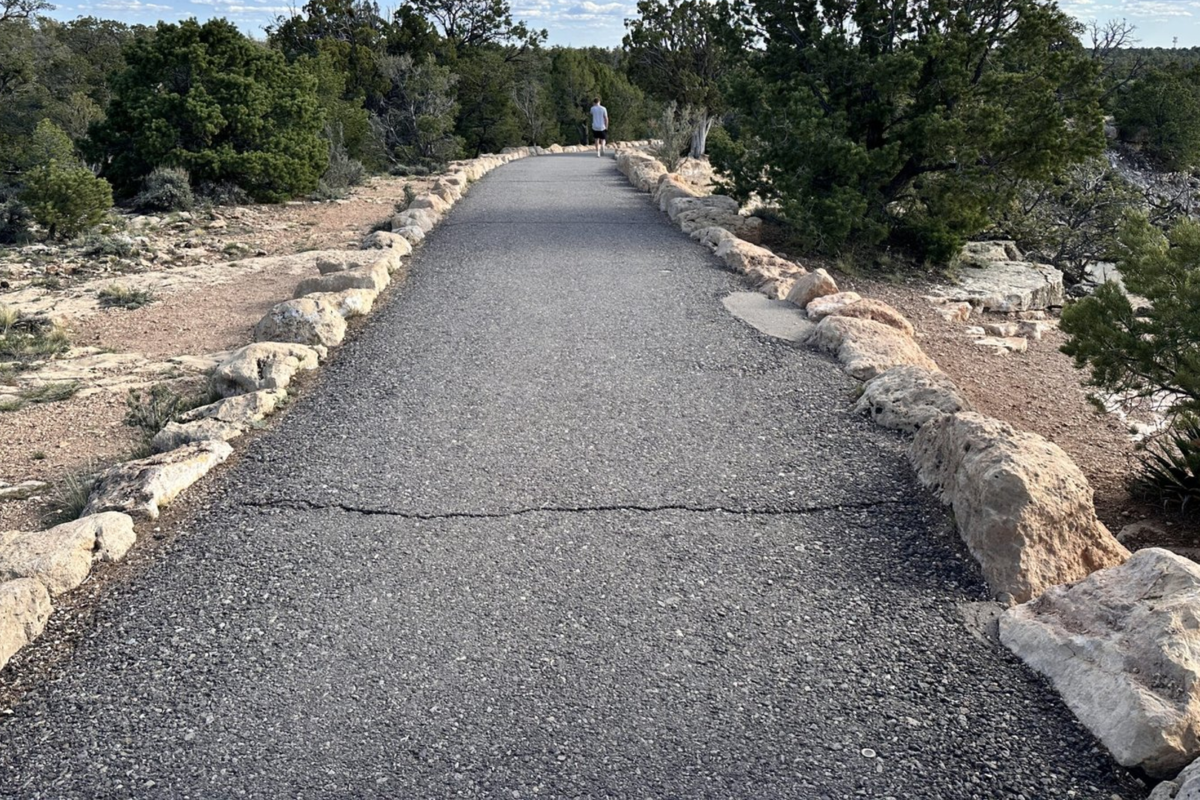
The Trail of Time along the South Rim turns the canyon's geology into a walkable exhibit. Rock samples, interpretive signs and views across the canyon let you connect formation names and rock types with the landscape in front of you. It is one of the best places to move from reading about Grand Canyon geology to recognizing it in the field.