
Historic Buildings & Places
Grand Canyon's historic architecture tells the story of rail travel, early tourism, conservation and the effort to design buildings that felt connected to the landscape. Many of the South Rim's most memorable structures are still in daily use.
El Tovar Hotel
Opened in 1905 beside the railroad terminus, El Tovar became the signature luxury hotel of the early South Rim tourism era and remains one of the park’s most recognizable historic buildings.
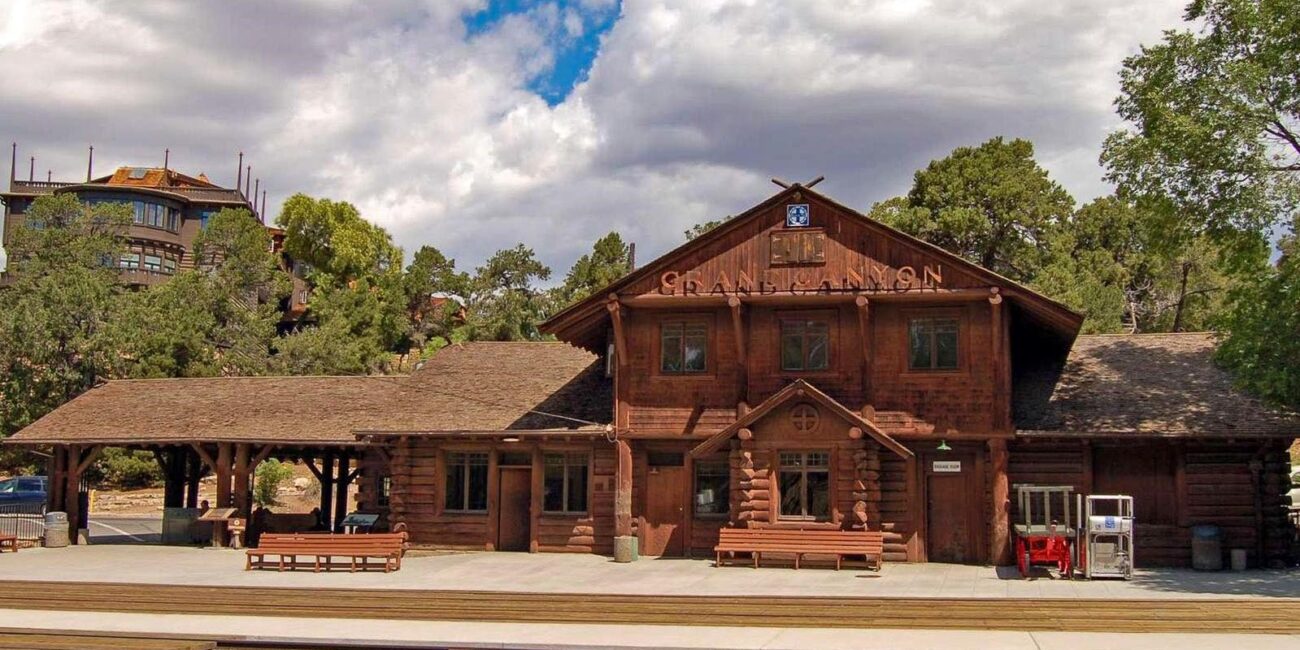
Grand Canyon Railway Depot
The historic log depot stands near El Tovar and recalls the transformation that began when the Santa Fe Railway reached the South Rim in 1901.
Hopi House
Designed by Mary Colter and opened in 1905, Hopi House was created as a market and demonstration space for Native artists. Its history is also part of a larger conversation about early tourism and representation of Indigenous cultures.
Bright Angel Lodge
Mary Colter’s 1935 lodge incorporated earlier structures and became a classic example of National Park Service rustic design along the South Rim.
Kolb Studio & Lookout Studio
Perched near Bright Angel Trail, Kolb Studio preserves the story of pioneering canyon photographers. Nearby Lookout Studio was designed by Colter to blend into the rim’s rock and views.
Desert View Watchtower
Completed in 1932, the Watchtower is one of Colter’s most ambitious works. Its design drew inspiration from ancestral Puebloan architecture of the Four Corners region and today serves as a cultural and scenic gateway.
See several landmarks without moving your car
Grand Canyon Village contains one of the country's most distinctive collections of early national-park architecture. A walking route between the railroad depot, El Tovar, Hopi House, Verkamp's, Bright Angel Lodge, Lookout Studio and Kolb Studio combines history with some of the South Rim's best views.
A Simple Grand Canyon Village Architecture Route
Most of the South Rim's best-known historic buildings sit close enough together that driving between them makes little sense. Park once, then let the buildings and rim views unfold in sequence.
Depot + El Tovar
Begin near the Grand Canyon Railway Depot and El Tovar to see how rail access and resort tourism reshaped the South Rim after 1901. The depot, hotel and adjacent rim immediately establish the railroad-era context.
Hopi House
Walk to Hopi House and look closely at its materials, massing and relationship to the rim. Its 1905 design is important both as a Mary Colter work and as part of the complicated history of how Native culture was presented to early tourists.
Bright Angel + Studios
Continue toward Bright Angel Lodge, Lookout Studio and Kolb Studio. Here architecture, photography, trail history and canyon views overlap, making this one of the richest short walks in the village.
Finish the Story at Desert View
Desert View Watchtower stands far enough east that it belongs to a separate scenic-drive stop rather than the village walking route. Its architecture, murals, views and present-day cultural programming make it worth treating as a destination instead of a quick photo stop.
How the Buildings Relate to the Landscape
The most interesting question is not simply when a building was constructed. Notice how stone, timber, massing, windows, terraces and sightlines were used to frame the canyon or make structures appear rooted in the rim. That design conversation is especially clear at Lookout Studio and Desert View Watchtower.