
Colorado River History
The Colorado River is both a natural force and a human corridor. Indigenous peoples knew and used the river and its tributaries long before Euro-American expeditions. Later explorers, scientists and commercial river runners transformed public understanding of the canyon, while dams upstream and downstream fundamentally altered the river itself.
Before the expeditions
The river corridor was already part of Indigenous homelands, travel routes, stories and cultural landscapes. Archaeological sites along the Colorado preserve evidence of repeated use over thousands of years.
Powell’s expeditions
John Wesley Powell led a famous 1869 expedition through the Green and Colorado rivers, followed by a better-equipped scientific expedition in 1871–72. Those journeys helped map and popularize a region still poorly known to most Euro-Americans.
The modern river
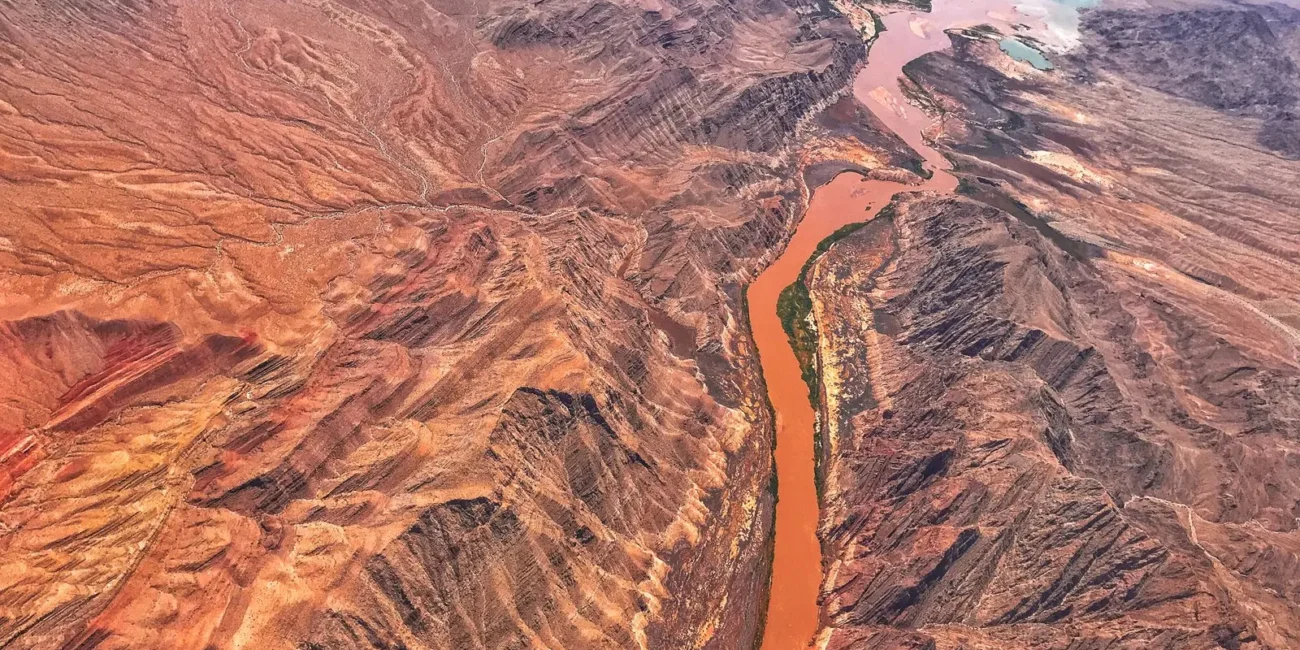
Glen Canyon Dam was completed in 1963 upstream of Grand Canyon. By trapping sediment and regulating flow, it changed water temperature, seasonal flooding, beaches and river ecosystems throughout the canyon.
Grand Canyon below Glen Canyon Dam
Before Glen Canyon Dam, spring snowmelt could send the Colorado above 100,000 cubic feet per second while late-summer flows could fall dramatically. Modern releases are much more controlled, and much of the sediment that once moved downstream is trapped in Lake Powell. Scientists continue to study how regulated flows affect beaches, native fish, vegetation and archaeological resources.
Where to Encounter Colorado River History
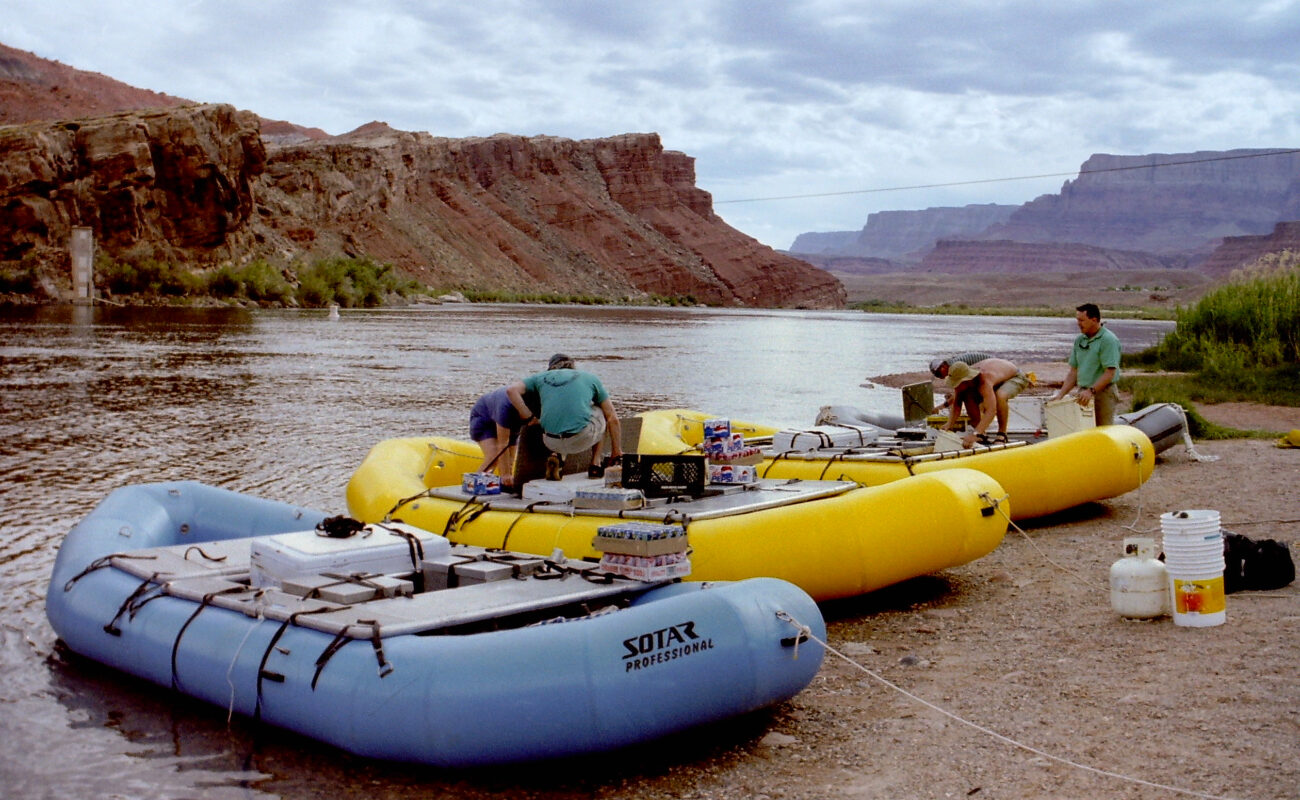
Visitors can connect river history to the landscape at several points: Lees Ferry at the upstream gateway, overlooks where the river is visible from the rim, and the river corridor itself on a commercial or private trip.
Lees Ferry
Lees Ferry marks the practical beginning of most Grand Canyon river trips and an important historic crossing area. It is also the point near which the regulated Colorado enters the canyon downstream of Glen Canyon Dam.
Desert View & East Rim
East-side viewpoints reveal long stretches of the Colorado and help visitors understand how the river threads through the canyon. The view also connects naturally with discussion of archaeological sites and older travel corridors.
River Trips
From the river, Powell's expedition routes, historic camps, modern rapids and the physical effects of flow regulation become much easier to visualize. Multi-day trips turn river history into lived geography.
Why Glen Canyon Dam Changed the Story
The dam did more than smooth out seasonal flow. It traps most upstream sediment and changed downstream water temperature, beach-building processes and habitat. Modern high-flow experiments and long-term monitoring exist because managers are still working to understand and mitigate those changes.
Powell Is Important, but He Is Not the Beginning
The 1869 expedition is central to Euro-American river history, but Indigenous peoples had already known, traveled and used the canyon and its tributaries for generations. River history makes more sense when exploration narratives sit inside that much longer human story.