
Wildlife of the Grand Canyon
Grand Canyon spans an extraordinary range of elevations, habitats and climates. That variety supports wildlife from ponderosa-pine forests and subalpine meadows to desert slopes, springs and the Colorado River corridor.
On the rims
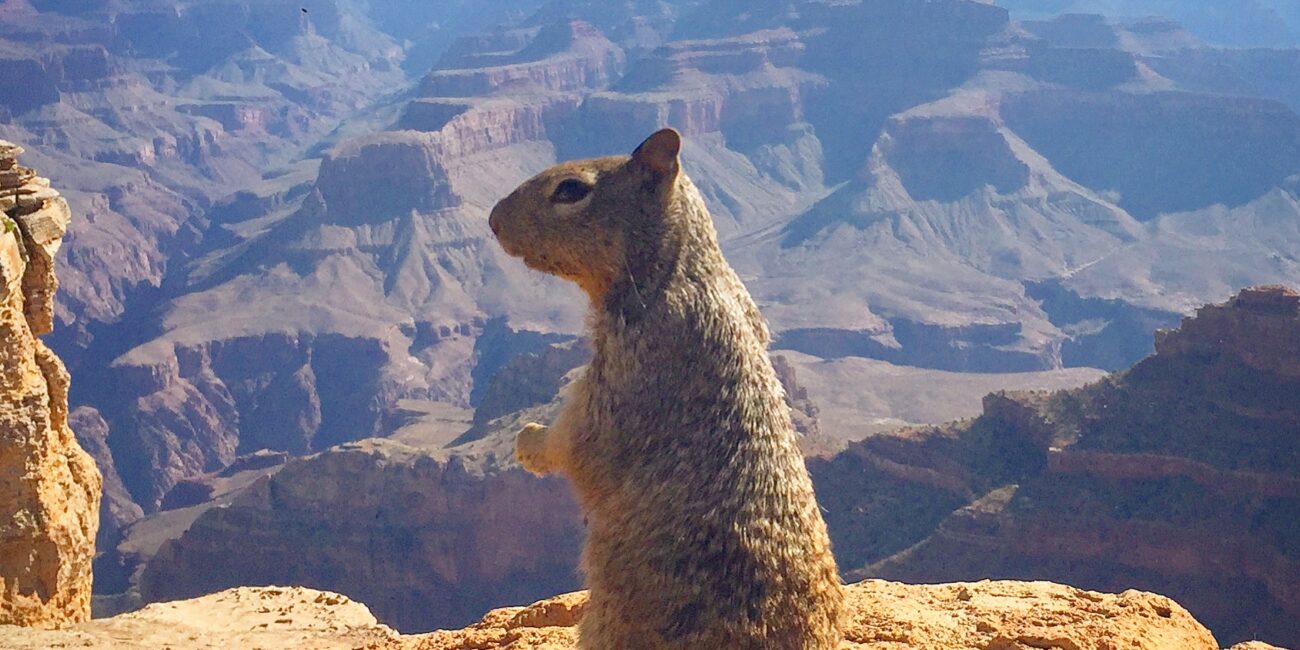
Elk, mule deer, coyotes, Abert’s squirrels and many bird species are among the animals visitors are most likely to notice on the South Rim. The higher, cooler North Rim supports species associated with mixed-conifer and subalpine forests, including the distinctive Kaibab squirrel.
Below the rim
The inner canyon becomes hotter and drier. Desert bighorn sheep, ringtails, bats, reptiles and numerous invertebrates occupy habitats that can feel almost like a different region from the forested rims above.
Along the river
Riparian zones around the Colorado River, springs and tributaries provide unusually rich habitat. Native fish, amphibians, birds and mammals depend on these scarce water sources in an otherwise arid landscape.
A remarkably diverse park
Current National Park Service statistics list about 450 bird species, 91 mammal species, 18 fish species, 58 reptile and amphibian species, and more than 1,400 invertebrate species in Grand Canyon National Park. The park is also habitat for federally protected species including the California condor and humpback chub.
Watch safely and give animals room
Never approach, feed or attempt to touch wildlife. Elk, bison, deer and other large mammals can injure people, and smaller animals can carry disease. Use a telephoto lens or binoculars, keep food secured, and follow current NPS wildlife-distance guidance.
What You Are Most Likely to See
Grand Canyon wildlife changes dramatically between the forested rims, desert interior and river corridor. Where you spend your time matters more than carrying a checklist of species.
Elk, Deer & Birds
Early and late in the day, elk and mule deer are commonly noticed around developed South Rim areas and forest edges. Ravens, jays and many smaller birds are active around the rim, while condors may occasionally be seen soaring over the canyon.
Kaibab Forest Species
The higher North Rim supports cooler forest habitat and species with more limited regional ranges, including the Kaibab squirrel. Meadows and forest edges can also be productive places to watch deer and birds.
Desert Specialists
Bighorn sheep, reptiles, bats, native fish and other heat-adapted species are more closely tied to inner-canyon slopes, springs and the Colorado River corridor. Many are less obvious than rim wildlife and reward patient observation.
More Than 450 Bird Species and 91 Mammal Species
Current NPS park statistics list 450 bird species, 91 mammal species, 18 fish species, 58 reptile and amphibian species, and 1,443 invertebrate species. Those numbers reflect the canyon's enormous elevation range and the way springs, forests, desert slopes and river habitat intersect in one protected landscape.
Observe, Do Not Attract
The best wildlife encounter is one where the animal never has to react to you. Give large mammals substantial room, never feed animals, secure food and trash, and use binoculars or a telephoto lens instead of moving closer for a picture.